Get in contact with Master Builder ACT using the form or any of the contact details below.
Become a Member Need help?
ACISRG

Mobile Plant – Don’t Be Complacent

Posted

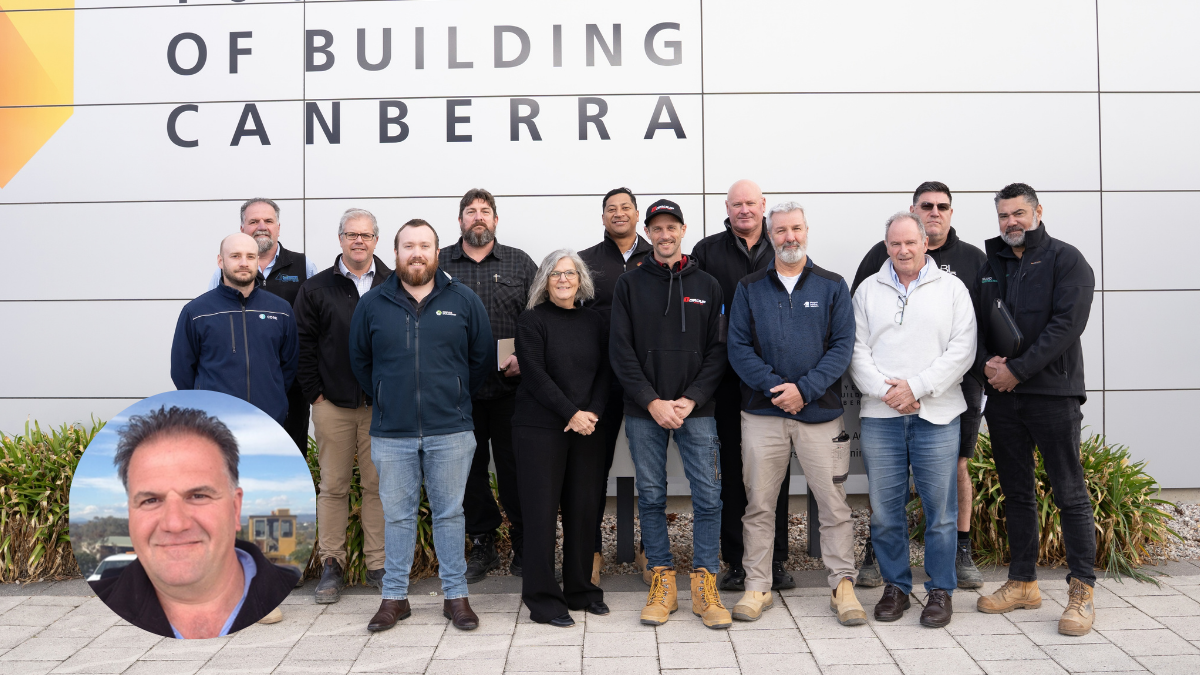
Hi, I am Simon Mula, Health Safety Quality & Environment Manager (HSQEM) for Guideline ACT. I cut my teeth as a young bloke starting my career in the civil construction industry as a trainee foreman undertaking deep excavation in the heart of Sydney CBD. Those were the days in the early 90’s, small areas below ground level with multiple mobile plant excavating sandstone (silica containing material) for a basement for a new high-rise building. Over the years (some 30 years) have developed my skill set with performing roles from foreman, project engineer, project manager numerous others along the way to where I am today,                                               as HSQEM for Guideline ACT. Working the Guideline Way for over 13 years with a vision that “Our people are our most valuable asset” and loving it.

What those early days taught me was the respect working around mobile plant and the importance of positive interactions with people to collectively build a project.

This brings me to the opportunity to discuss mobile plant; one of the highest risk activities and it is easy to become complacent around in the construction industry.

Why is it important to managing the risk of working around mobile plant?

Here are some statistics;

  • Vehicle related accidents account for approximately 42% of all workplace deaths nationally. This is the largest proportion of facilities in the construction industry.
  • One third of all construction site mobile plant incidents involve a person being struck or caught between a machine and an object.
  • Over 72% of incidents where workers struck by moving plant occur while the vehicle is travelling in reverse.

These are facts are alarming and involve real people being injured or killed!

What can we do?

Undertake best practice risk mitigation strategies with the most effective approach following the hierarchy of control.

  • Pedestrian Interaction Hazard

Control measures:

  • Establish exclusion zones
  • Separate people and plant
  • Use physical barriers
  • Special consideration for sites with multiple trades being carried out at the same time.
  • Blind Spot Hazards

Control measures:

  • Trained / experienced ground personnel
  • Use of proximity detection sensors
  • Constant contact between ground workers and operators is essential
  • Reversing Hazard

Control measures:

  • Implementation of traffic control devices
  • Install and use of reverse cameras
  • Encourage reverse only parking
  • Visual and audible plant alarms
  • Plant Rollover Hazard

Control measures:

  • Conduct ground assessments
  • Use of Roll Over Protection Structures (ROPS)
  • Wearing of seat belts
  • Avoid operation on unstable surfaces
  • Follow manufacturer operating limits
  • Falling Loads and Suspended Loads Hazard

Control Measures:

  • Generate lift plans
  • Establish exclusion zones
  • Inspect and tag lifting gear
  • Use experience and competent operators.
  • Use High Risk Dogging licensed personnel
  • Service Strike Hazard

Control measures:

  • Acquire current Before You Dig Australia information
  • Service locating and positive identification
  • Use Excavation permit systems
  • Comply with authority’s minimum approach distances
  • Mechanical Failure Hazard

Control measures:

  • Carry out scheduled servicing
  • Undertake preventative maintenance programs
  • Follow the Original Equipment Manufacturer (OEM) manual
  • Do daily plant prestart inspections
  • Inexperienced Operator Hazard

Control measures:

  • Training and competency verification
  • All personnel to follow “Fit for Work” policies and procedures
  • Obtain High Risk Work Licences
  • Encourage operators to speak up and stop work if something doesn’t feel right

Effective risk mitigation relies on the importance of interaction with all workers for consultation and communication encouraging workers participation through the likes of Safe Work Method Statements (SWMS), Site specific traffic management plans, daily prestart meetings, site inspections and toolbox talks.

Fostering a positive culture working around mobile plant organisations can significantly reduce the likelihood of incidents and create safer workplaces for all personnel within the construction industry.