Every year, workers are killed or seriously injured in falls from heights, yet the same incidents continue to occur across Australian workplaces. The uncomfortable question is: why are we still getting this wrong?
According to Safe Work Australia, falls from height remain one of the leading causes of workplace fatalities. In 2025, 28 Australian workers were killed in falls from height, making it the second-highest cause of traumatic workplace fatalities, accounting for 13% of all worker deaths.
The construction industry continues to be over-represented in these incidents, despite decades of awareness campaigns, guidance material, and enforcement activity. Safe Work Australia describes working at heights as a leading cause of death and serious injury in Australia.
A common misconception is that only falls from significant heights are dangerous. While construction work involving a risk of falling more than two metres is classified as high-risk construction work, serious injuries and fatalities can and do occur from falls below two metres. A fall from a single-storey roof, ladder, scaffold platform, ute tray, or even a short step-up can result in life-changing head injuries, spinal injuries, permanent disability, or death.
This topic was discussed at the MBA Build Better Series WHS Roundtable this month highlighting the concerns that there is in our local industry a persistent misconception that low-height is low-risk, that poor planning and supervision failures are contributing to common fall incidents from ladders, decks and platforms.
Recent enforcement action highlights the ongoing problem. In September 2026, WorkSafe Victoria announced a $100,000 fine against a solar installation company after workers were repeatedly observed working at heights between 2.6 and 7 metres without adequate fall protection across multiple residential sites.
Solar company fined $100,000 for repeated falls from heights offences | WorkSafe Victoria
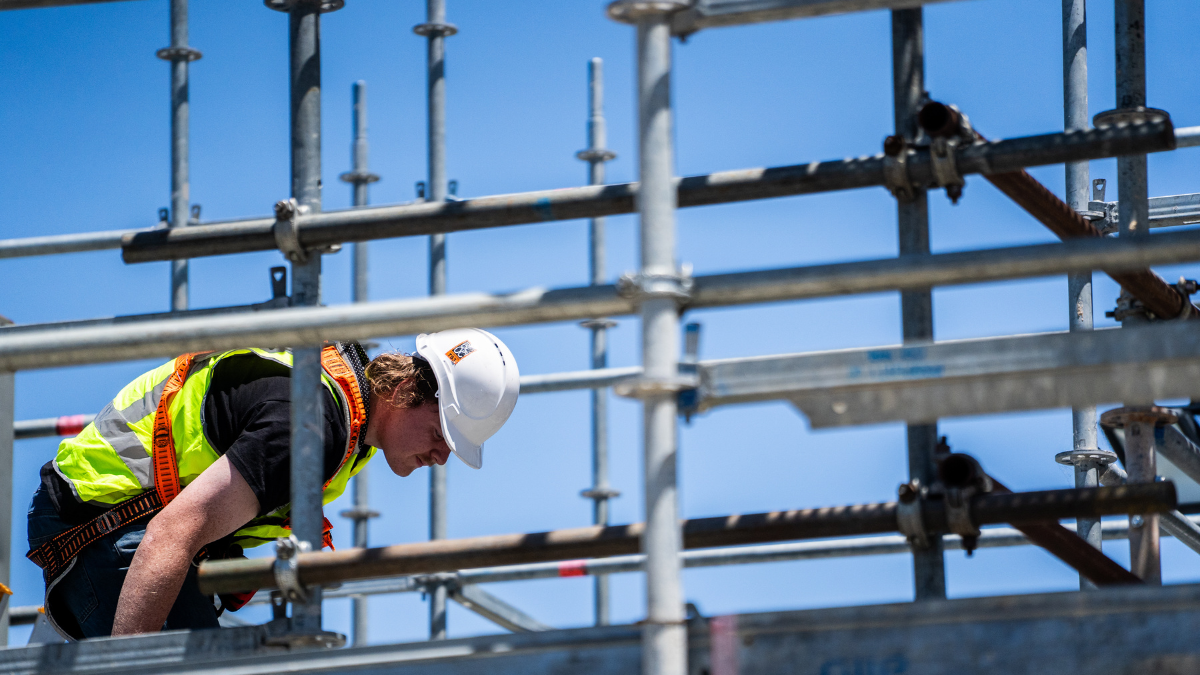
The controls are not a mystery. Guardrails, scaffolding, edge protection, travel restraint systems, secured ladders, and effective supervision are all well-established measures that can prevent falls.
The height doesn’t determine the consequence. The landing does.
This week, take a moment to review your work areas, challenge complacency, and ask yourself and your team: If a worker fell from this position today, would they go home tonight?
Because one fall is one too many.
For assistance refer to MBA latest WHS resource – Low-height fall risk assessment