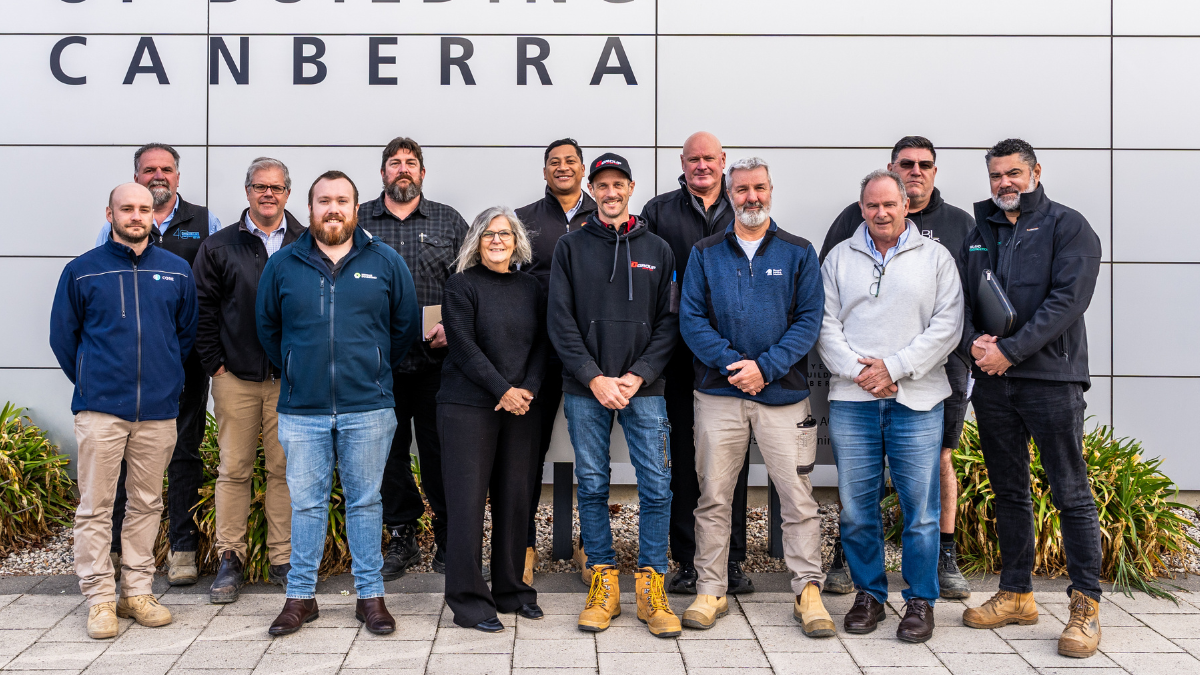
By David van Zanten
David van Zanten began his career as a carpenter in 1982 and has since worked across Australia and Papua New Guinea in diverse construction roles. For the past 18 years, he has focused on Health and Safety, Environment, and Quality management, approaching safety as an educator to drive both immediate compliance and lasting cultural change. This perspective shapes his view on the Heavy Vehicle National Law (HVNL) and Chain of Responsibility (CoR): these are not abstract legal terms but practical obligations that the construction industry can no longer afford to ignore.
The Heavy Vehicle National Law (HVNL) and its Chain of Responsibility (CoR) provisions are not just legal jargon—they are practical obligations that many in the construction industry continue to overlook. This is not legal advice, but as someone deeply involved in safety and training, I believe it’s time we acknowledge the reality: these laws apply to us, and recent amendments make them even more critical.
Too often, people assume HVNL only concerns vehicle owners or drivers. That’s wrong. Any vehicle with a gross mass of 4.5 tonnes or more falls under HVNL. If you request a delivery by heavy vehicle, send goods via heavy vehicle, or load one, you are part of the Chain of Responsibility. Ignoring this is no longer an option.
Common Construction Practices That Breach HVNL
Consider these everyday scenarios:
These aren’t hypothetical—they happen daily. And under HVNL, they expose principal contractors, subcontractors, and individuals to liability.
Principal Contractors and Subcontractors: Shared Responsibility
The law is clear: the Principal Contractor has a primary duty to ensure, as far as reasonably practicable, that transport activities are safe. Subcontractors and individuals also carry obligations. If you influence transport tasks—by requesting unrealistic timeframes or ignoring load limits—you share responsibility for breaches.
Executives and legal entities are not exempt. They must exercise due diligence to ensure compliance. In simple terms: don’t do anything that encourages speeding, overloading, or fatigue breaches. Allow time for loads to be covered and secured before vehicles leave site.
Recent HVNL reforms raise the stakes and strengthen these duties. Penalties for breaches have increased, and enforcement powers have expanded. Safety Management Systems (SMS) are now central to accreditation, and NHVR can issue codes of practice to guide compliance. These changes signal a cultural shift: safety is no longer negotiable—it’s embedded in law.
As a construction industry safety manager I believe these obligations aren’t just about avoiding fines—they’re about preventing harm. The construction industry must stop treating CoR as an afterthought. Integrating CoR into our safety management system, training staff, and planning transport activities responsibly is not optional—it’s leadership.
The HVNL is evolving, and so must we. Compliance isn’t a burden; it’s an opportunity to build a safer, more professional industry.
There is a lot of detail in the legislation. For specific guidance relating to Principal Contractors:
For general guidance: